

A badgir is a traditional wind tower rising from the roofs of houses in the hot, dry regions of Iran and the Middle East. Openings at the top of the tower catch the wind and bring it down into the rooms below; when the wind drops, warm indoor air is drawn up the same tower and expelled. The house thus gets natural cooling and ventilation without any electrically powered device.
The wind towers that define the skyline of the Iranian city of Yazd were built to keep houses in desert cities cool centuries before electric air conditioning; this is why they are often called “ancient air conditioners”. In this article we explain how a badgir works, which materials and features provide its cooling effect, where the same logic appears in today’s buildings, and how thermal insulation completes it against summer heat.
What is a badgir and where did it originate?
A badgir, known in English as a windcatcher, is a vertical tower that directs the wind into a building. As the International Institute of Refrigeration (IIR) describes it, these towers rise like chimneys from the roofs of old houses in Iran’s desert cities.
According to the IIR, the oldest surviving badgirs in Iran date from the 14th century, but the idea goes back much further: a similar device appears in a painting from the house of Nebamun in Egypt, dated to around 1300 BC. If you are curious about other early ways of staying cool in a dry climate, see our article on ancient Egyptian architecture.
The place most associated with the badgir is Yazd in central Iran. The IIR notes that Yazd, located in one of Iran’s driest regions, is known for its wind towers and has been inscribed on the UNESCO World Heritage List. Rising above the city’s rooftops, the Yazd wind towers are among the best-known examples of this architecture.
How do badgir towers work?
A badgir works in two ways: when the wind blows, it brings the air entering the mouth of the tower down into the living spaces; when the air is still, it uses the tendency of warm indoor air to rise and draws it out through the tower.
The openings at the top of the tower take in the wind. This air travels down the vertical shaft inside the tower to the rooms and keeps a constant flow of air moving indoors even when it is scorching outside. A review published in Frontiers in Built Environment in 2025 explains that in two-sided towers one opening takes air in while the opposite face works like a chimney and draws indoor air out.
The second half of the system relies on the tendency of warm air to rise. Indoor air heated during the day moves up the tower and out, and cooler air takes its place. Thanks to this stack effect, the tower keeps the air circulating even in windless hours.
According to the same review, a wind tower does not necessarily cool the air itself; the feeling of coolness comes largely from the rate of airflow. That is why the orientation of the tower matters. A study in the Journal of Architecture in Hot and Dry Climate, published by Yazd University, carried out long-term measurements on the wind tower of the Mortaz House in Yazd. According to the results, the tower’s orientation allows it to receive 80 percent of the prevailing summer winds. The match between the airflow leaving the tower and the outdoor wind was also found to be higher during the cooling season.
How does water increase the cooling effect of a badgir?
When water evaporates in dry air, it draws heat from its surroundings. When the air coming down a badgir comes into contact with water, this evaporation cools it further before it reaches the rooms.
Some designs therefore combine the tower with water. According to the IIR, many traditional water reservoirs were built with wind towers, and this arrangement can keep water at near-freezing temperatures during the summer months. The same source refers to studies showing that wind towers can reduce indoor temperatures by around 10 °C. The Frontiers review also reports that wet curtains have been hung inside the air shaft, or wetted evaporative cooling pads fitted at the tower entrance, to improve performance.
This method has a limit: as the IIR points out, evaporative cooling is strongest in the driest climates, which is one reason wind towers became widespread in arid regions such as the Iranian plateau. Where the air is already humid, the same effect should not be expected.
Which materials and features provide natural cooling?
The effect of a badgir comes as much from the building around it as from the shape of the tower. The main features that help keep traditional houses in arid climates cool are:
- Thick adobe and earth walls: They store and delay heat, smoothing out daily temperature swings indoors.
- Tall tower form: It catches the wind at a height where it blows more strongly than at ground level.
- Water and wet surfaces: In some buildings the air is brought into contact with water for extra cooling through evaporation.
- Oriented openings: The mouth of the tower is positioned according to the prevailing wind direction of the region.
| Feature | How does it work? | Benefit |
|---|---|---|
| Tower openings | Catch the wind and bring it down the vertical shaft | Constant airflow through the rooms |
| Stack effect | Draws warm indoor air up and out | Ventilation even in windless hours |
| Thick earth walls | Store heat during the day and pass it indoors late | More stable indoor temperature |
| Water surface | Draws heat from the air through evaporation | Extra cooling in dry climates |
When these features work together, a badgir provides ventilation and cooling without mechanical equipment such as fans or compressors. This comes at a cost: the IIR notes that because they stand at the highest point of a building, wind towers are particularly susceptible to deterioration and decay. Keeping the tower working depends on regular maintenance.
Is the badgir principle used in modern buildings?
Yes. The wind tower idea is used today both in architectural projects and as a ready-made product. The IIR reports that the approach has been applied at the visitor center of Zion National Park in Utah, USA, without adding mechanical devices to regulate temperature. The Frontiers review highlights the development of commercial windcatcher systems that are compact, lightweight and rise less above the roof.
The same principle is also found in Turkish legislation. The architectural design article of the Regulation on Energy Performance in Buildings, published in the Official Gazette on 5 December 2008, requires designers to make maximum use of natural heating, cooling, ventilation and lighting opportunities. If you would like to see another system in nature that moves air through the shape of the structure itself, read our article on the termite mound.
The Frontiers review also notes that a tower’s efficiency drops on calm days. To close this gap, wind towers can be combined with modern technologies for cooling, heating or dehumidification.
What does this mean for your building?
The lesson of the badgir is that coolness starts with the building itself. Natural ventilation alone is not enough, however: to stop the heat passing in through a roof and walls warmed by the summer sun, the building envelope must also be insulated.
Roofs and terrace slabs are the surfaces that receive direct sun for the longest time, so the roof is usually the first place to look when it comes to keeping a house cool in summer. For layer order and material choice on flat terraces, our guide to flat roof insulation shows the way. Mega’s stone wool range includes a flat roof board for flat terraces and roofs and a stone wool ETICS board for rendered external wall systems.
| Product | Type | λD (W/mK) | Thickness (mm) | Compressive strength | Application |
|---|---|---|---|---|---|
| Flat Roof Board | 40 kPa | ≤0.039 | 40, 50, 60, 80, 100 | min. 40 kPa | Flat roofs, pitched metal and timber roofs |
| ETICS Board | MEGA SW F150 | ≤0.037 | 40–120 | min. 40 / 45 / 55 kPa | Rendered external wall insulation systems |
The values in the table are taken from Mega technical data sheets; λD is the declared thermal conductivity at 10 °C, and the lower the value, the more slowly the material lets heat through. The thickness required depends on the climate zone of the building and on the building element. Under the Regulation on Energy Performance in Buildings, this decision is made in the thermal insulation project prepared with the calculation method set out in TS 825.
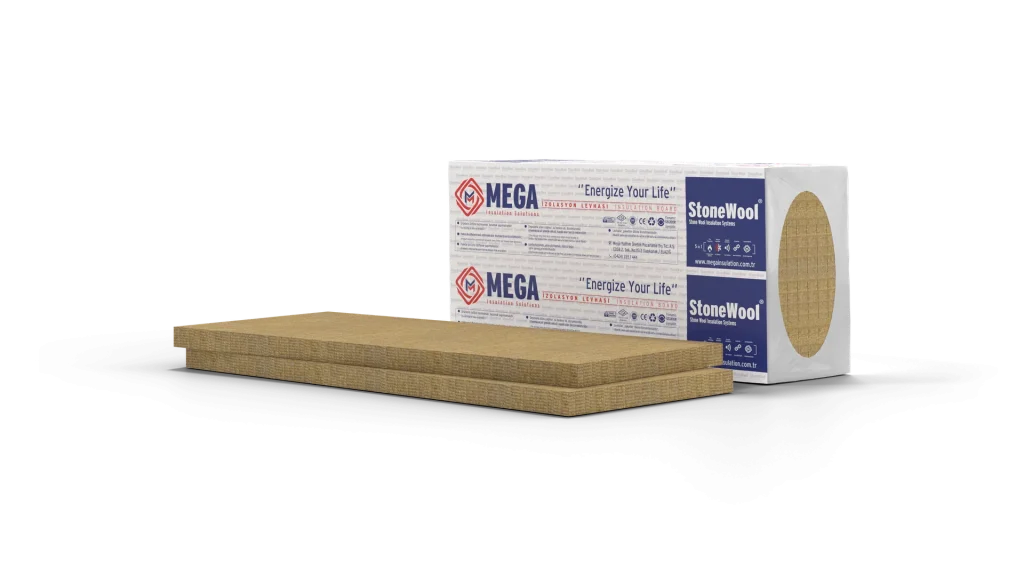
Mega Insulation Solutions (Mega Yalıtım) is a Turkish insulation materials manufacturer headquartered in Kavacık, Istanbul, with its factory in Elazığ; alongside stone wool, XPS and EPS thermal insulation boards, it offers MegaBlock, MegaLento, DesiWool, MegaTech construction chemicals and Fullback waterproofing products under the Mega brand.
Application note from MegaUsta: Time your ventilation in summer. When the outdoor air is cool, at night and early in the morning, open windows on opposite sides to let a draught pass through the house; during the day keep sun-facing windows closed and shaded. A well-insulated roof and facade keep the coolness let in at night for longer during the day.
The badgir is just one of the building solutions people developed to cope with climate. You can find other examples, from Rome to igloos, together in our article on the history of insulation.
Frequently Asked Questions
What is a badgir?
A badgir is a traditional wind tower rising from the roofs of houses in the hot, dry regions of Iran and the Middle East. Its upper openings catch the wind and send it down into the rooms; without wind, it draws warm indoor air up and out like a chimney. The best-known examples are in Yazd, Iran. According to the International Institute of Refrigeration, Iran’s oldest surviving badgirs date from the 14th century.
How does a wind tower cool a house?
A wind tower cools a house mainly through air movement. Air coming down the tower creates a steady current through the rooms, while warm indoor air leaves through the opposite face of the tower or by the stack effect. In some buildings the air is also brought into contact with water surfaces or wet curtains and cooled further by evaporation. This extra effect is strong in dry climates and weak in humid air.
Is the badgir principle used in modern buildings?
Yes. The wind tower principle is used today both in architectural projects and in compact commercial systems installed on roofs; the visitor center at Zion National Park in the USA is a well-known example. For natural ventilation to work in summer heat, the building also needs thermal insulation that limits the heat entering through the roof and walls. That is why modern buildings treat the badgir idea together with insulation.
Sources
- International Institute of Refrigeration (IIR): Windcatchers: the birth of air conditioning and natural refrigeration?
- Mayhoub, M., Selim, H., Abuzaid, A. (2025): Roadmap to developing a geometrical design guide for windcatchers, Frontiers in Built Environment
- Hedayat, Z., Emadian Razavi, S. Z., Ayatollahi, S. M. H. (2020): Wind flow patterns in ancient wind catchers of Yazd based on a long term measurement (case study: Mortaz house), Journal of Architecture in Hot and Dry Climate, Yazd University
- Official Gazette of Türkiye: Regulation on Energy Performance in Buildings (5 December 2008, No. 27075), Articles 7 and 10
- Mega Insulation: Flat Roof Board 40 kPa technical data sheet
- Mega Insulation: MEGA SW F150 ETICS Board technical data sheet
- Mega Insulation: Documents
You can review which product suits roofs, terraces and facades on our stone wool boards page, and contact us for technical support specific to your project.