

Whether you can plaster in winter depends on the weather itself: according to Mega’s technical data sheets, cement-based plasters and tile adhesives are applied when the ambient temperature is between +5 °C and +35 °C. Mortar is not applied to surfaces that are frozen, thawing or at risk of frost within 24 hours. On winter days that meet these conditions, and in heated interiors, work can go ahead.
On a winter site, the calendar does not make the call; what matters is how low the thermometer will drop on the day of application and the night that follows. Below you will find the common weather rules in the MegaTech data sheets, the pot life of mortar and bag storage in one place; for the product groups, see our article what are construction chemicals.
In what temperature range are cement-based mortars applied?
According to the MegaTech technical data sheets, cement-based mortars are applied between +5 °C and +35 °C. The answer is the same for anyone asking at what temperature adhesive can be applied: the range is identical for machine and hand plasters, thermal insulation board adhesive and tile adhesives.
Temperature is not the only condition. The table below brings together the other rules common to the data sheets and the product-specific pot life of the mix.
| Condition | Rule in the technical data sheet | Applies to |
|---|---|---|
| Ambient temperature | Between +5 °C and +35 °C | All MegaTech powder products |
| Frost | Not applied to surfaces that are frozen, thawing or at risk of frost within 24 hours | All MegaTech powder products |
| Sun, wind, hot surfaces | Not applied in direct sun, strong wind or on hot surfaces | All MegaTech powder products |
| Skin formation | If a skin forms on the mortar surface, the mortar is notched again | Adhesives applied with a notched trowel |
| Pot life of the mix | 1 hour at most | MTP-7133 machine plaster |
| Pot life of the mix | 2 hours at most | MTA-3333 thermal insulation board adhesive |
| Pot life of the mix | 5 hours at most | MTC-2221 tile and ceramic adhesive mortar |
| Shelf life | 12 months from production under proper storage | All MegaTech powder products |
| Stacking | Kraft bags stacked no more than 8 high, plasters no more than 6 high | All MegaTech powder products |
Source: MegaTech MTP-7133, MTA-3333, MTC-2221, MTC-2222 and MTC-2232 technical data sheets.
The rules in the table belong to the MegaTech range of Mega Insulation Solutions (Mega Yalıtım). Headquartered in Kavacık, Istanbul, with its plant in Elazığ, this Turkish manufacturer of insulation materials offers stone wool, XPS and EPS boards as well as MegaTech construction chemicals and Fullback waterproofing products under the Mega brand.
Performance requirements for plastering mortars are defined in EN 998-1 and those for tile adhesives in EN 12004-1; EN 13914-1 covers the application of external rendering. The weather conditions required on the day of application, however, are stated in the product’s own data sheet.
Why is mortar not applied in cold and frosty weather?
In the cold, cement reacts with water more slowly; if it freezes, the water inside the mortar turns to ice and expands, damaging the mortar before it has gained strength. The +5 °C lower limit and the 24-hour frost rule in the data sheets exist to prevent this risk.
Mortar starts to set as soon as it is mixed with water and gains strength through curing over the following days. The colder the weather, the longer this takes. When the temperature falls below zero, the water in the pores turns to ice, expands and strains bonds that are still weak. The damage often does not show on the day; over time the plaster can blister or dust, and tile joints can crack.
The data sheet rule has two sides. The first is the surface: a wall that froze overnight and starts thawing in the morning sun is not ready for work, even if the air has warmed up. The second is the next 24 hours: on a day that looks like +8 °C at noon, no plaster is applied if frost is expected at night. That is why winter work is planned with hourly forecasts; the Turkish State Meteorological Service’s province and district forecast page shows hourly temperature and wind speed.
On smooth surfaces such as exposed concrete, the MTP-7133 data sheet requires primer 1 day before plastering; in winter this adds one more day to the weather window. The declared application temperature for the exposed concrete primer is also between +5 °C and +30 °C. Details are in our article how to apply exposed concrete primer, and the products are on the exposed concrete primer page.
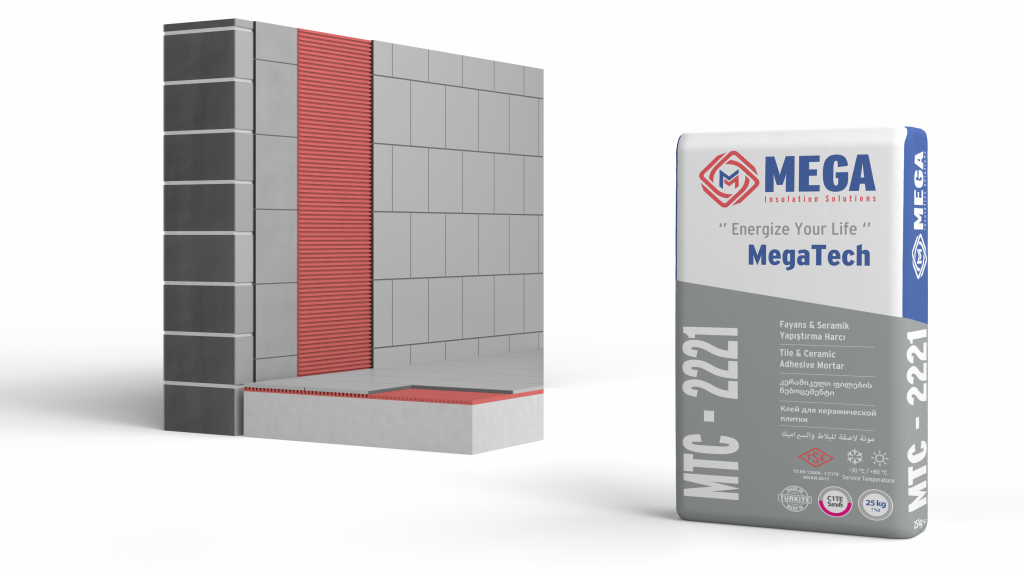
The question of whether tiles can be laid in winter follows the same rule. On facades, balconies and terraces, tiles are not laid while the frost risk lasts. In a building where the heating is running, tiles can be laid indoors in winter too, provided the room temperature is kept within the data sheet range and the substrate is not frozen. For the adhesive class, our article on the difference between C1TE and C2TE will guide you.
What should you watch for in hot weather and direct sun?
In hot weather the main problem is the mortar losing its water too early. The data sheets state that mortar must not be applied in direct sun, on hot surfaces or above +35 °C; if a skin forms on the mortar surface, the mortar is notched again.
A skin forms when the top of the notched mortar dries and crusts over; a tile or board pressed onto this crust does not bed fully into the mortar. With tiles, time also gets shorter: according to the MTC-2222 and MTC-2232 data sheets, tiles are placed within 20 minutes, and this time can be shorter in high temperatures, low humidity and wind. On site, this means notching mortar over small areas on hot days.
The work sequence follows the sun: instead of the south facade that heats up at noon, work moves to the north facade at those hours. Even winter sun can warm a dark surface; besides the air temperature, check the surface by hand.
How do rain and wind affect application?
Rain washes the binder out of fresh mortar, while wind dries it out quickly. That is why MTA-3333 board adhesive is not applied in rain or strong wind, and tiles laid with MTC-2222 and MTC-2232 are protected from direct contact with water for 24 hours.
Waiting times after application are given per product in the data sheets:
- MTC-2222 and MTC-2232 tile adhesives: Tiles are protected from direct contact with water for 24 hours.
- MTC-2221 and MTC-2233: Grouting starts after 24 hours on walls and 48 hours on floors.
- MTA-3333 board adhesive: Mechanical anchors are installed after at least 24 hours, and the board plaster follows after 2 days.
- MTP-7133 machine plaster: Applied at 5–25 mm per coat; if the thickness exceeds 25 mm, a second coat is applied after the first has set.
In cold, damp weather mortar hardens more slowly; if the time is up but the surface is still soft, wait a little longer. For the layer beneath the tiles on terraces and balconies, see our article how to apply cementitious waterproofing.
How is the surface protected while it cures?
While it cures, the surface is protected from frost, rain, direct sun and strong wind. The data sheets point out that an adhesive may not reach its full strength until curing is complete; protection therefore continues after the work is finished, until the mortar has hardened.
The methods used on site for this are simple:
- Sheeting: A tarpaulin or mesh stretched on the scaffold keeps off rain and wind; it is tied clear of the plaster.
- Shading: On a sunny facade, the same sheeting keeps the surface from drying too quickly.
- Moistening: On hot, windy days, plaster that has begun to harden can be moistened with a fine water spray; this is not done on days when frost is expected.
- Doors and windows: Indoors, openings are closed; hot air from heaters is not directed straight at fresh mortar.
Application note from MegaUsta: On winter facades, start new areas in the morning so that the mortar begins to harden before the evening cold. Leave the afternoon for grouting, cleaning and sheeting.
How should the bags be stored?
MegaTech bags are stored in a dry, enclosed area out of direct sunlight; shelf life under proper storage is 12 months from production. Kraft bags are stacked no more than 8 high, and plaster bags no more than 6 high.
The most common storage problem in winter is bags drawing moisture. Bags are not placed directly on concrete; they are kept on pallets and covered. Mortar mixed from a bag that has started to clump may not deliver the data sheet values.
Mortar is not mixed in an iced-up bucket; clean water is used and, according to the data sheets, no water or powder is added once the mix is homogeneous. Pot life is not stretched by adding water to stiffening mortar.
How are insulation boards bonded in cold weather?
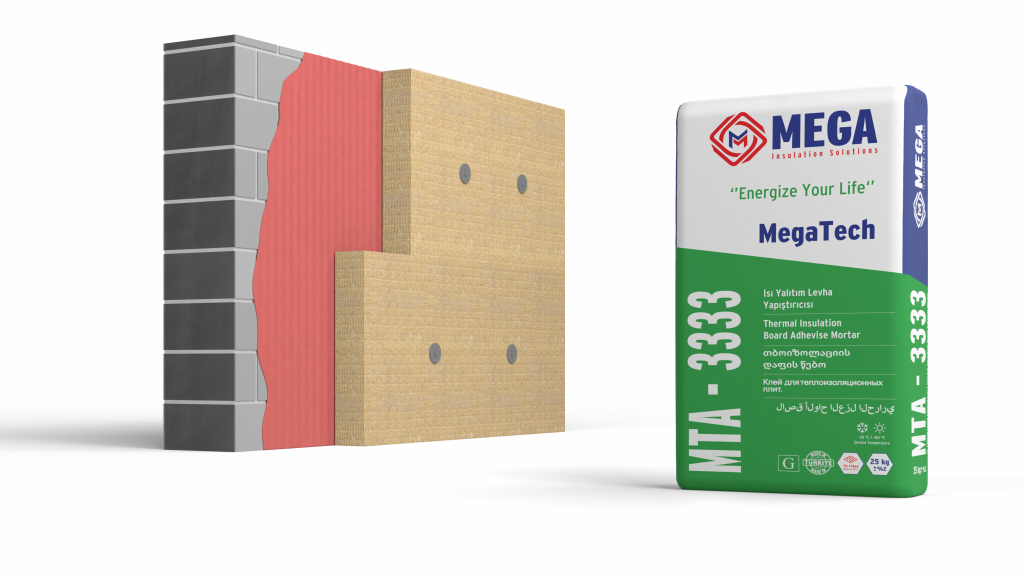
Insulation boards are bonded under the same temperature and frost rules as plaster and tiles; according to the MegaTech data sheets, board adhesive and board plaster are applied between +5 °C and +35 °C. The difference is that an external insulation (ETICS) job spreads over several days.
According to the MTA-3333 data sheet, boards are anchored at least 24 hours after bonding and the board plaster follows after 2 days. The suitable weather window therefore needs to last several days. The data sheet requires the adhesive to be protected from frost until it has set and from rain until it has fully dried. Since stone wool, EPS and XPS boards are bonded with the same adhesive, the rule does not change with the board type.
We explain which season is more favourable in our article when to apply external insulation, and the application steps in detail in our guide how external insulation is applied.
Frequently Asked Questions
At what temperature can you plaster?
According to the MegaTech technical data sheets, cement-based plaster is applied when the ambient temperature is between +5 °C and +35 °C. If frost is expected within the next 24 hours, no plaster is applied, and frozen or thawing walls are not plastered either. At the upper end, direct sun and heated surfaces cause problems, so on hot days work is moved to the hours when the sun has left the facade.
Can you lay tiles in winter?
Tiles can be laid in winter if the ambient temperature stays between +5 °C and +35 °C and the substrate is not frozen. In heated interiors this condition is usually met. On facades, balconies and terraces, however, the job is postponed if there is a frost risk on the day of application or in the following 24 hours. For grouting, the MTC-2221 data sheet requires a wait of 24 hours on walls and 48 hours on floors.
What happens if it rains after plastering?
Rain on plaster that has not yet hardened can wash out the cement laitance at the surface and leave run marks and dusting. That is why a freshly plastered facade area is protected with sheeting stretched on the scaffold until the mortar has hardened. If, after the rain, the surface shows blistering, dusting or sounds hollow when tapped, that area is scraped off and re-plastered under data sheet conditions.
Can you plaster a frozen surface?
No, a frozen surface is not plastered. The MegaTech technical data sheets state that the products must not be applied to surfaces that are frozen, thawing or at risk of frost within 24 hours. A wall that froze overnight can still be cold and damp inside at noon. Wait until the surface has fully thawed and dried and the forecast shows the following day to be frost-free as well.
How long can mixed mortar be used?
It depends on the product and is stated on the technical data sheet. The MTP-7133 machine plaster mix must be used within 1 hour, the MTA-3333 board adhesive within 2 hours at most, and the MTC-2221 tile adhesive within 5 hours at most. Mortar that has passed its pot life or skinned over in the bucket is discarded; it is not reused by adding water or powder.
Sources
- Turkish State Meteorological Service, province and district forecasts
- EN 998-1:2016 rendering and plastering mortar standard, scope (SIS)
- EN 12004-1:2017 adhesives for ceramic tiles standard, scope (SIS)
- EN 13914-1:2016 external rendering application, scope (SIS)
- Mega MTP-7133 machine plaster technical data sheet (PDF)
- Mega MTA-3333 thermal insulation board adhesive technical data sheet (PDF)
- Mega MTC-2221 tile and ceramic adhesive mortar technical data sheet (PDF)
- Mega MTC-2222 flexible tile and ceramic adhesive mortar technical data sheet (PDF)
- Mega MTC-2232 granite and ceramic adhesive mortar technical data sheet (PDF)
- Mega Yalıtım technical documents
The cement-based machine plaster and ready-mixed hand plaster mentioned in this article are on the MegaTech plasters page, while the tile and ceramic adhesive mortar, granite and ceramic adhesive mortar and thermal insulation board adhesive are in the MegaTech construction chemicals category. For the right product and timing for your site, you can reach the Mega Yalıtım technical team via the contact page.