The role of insulation materials in building fires has been a subject of debate in recent years. So, are insulation materials fire-safe?
What are Fire Classes?
According to European standards, building materials are classified from A1 to F:
- A1: It is completely fireproof (stone, concrete, rock wool).
- A2: Slightly flammable
- BC: Limited flammability.
- ALSO: Moderately flammable (EPS falls into this category)
- F: It burns easily.
Stone Wool: Fire Barrier
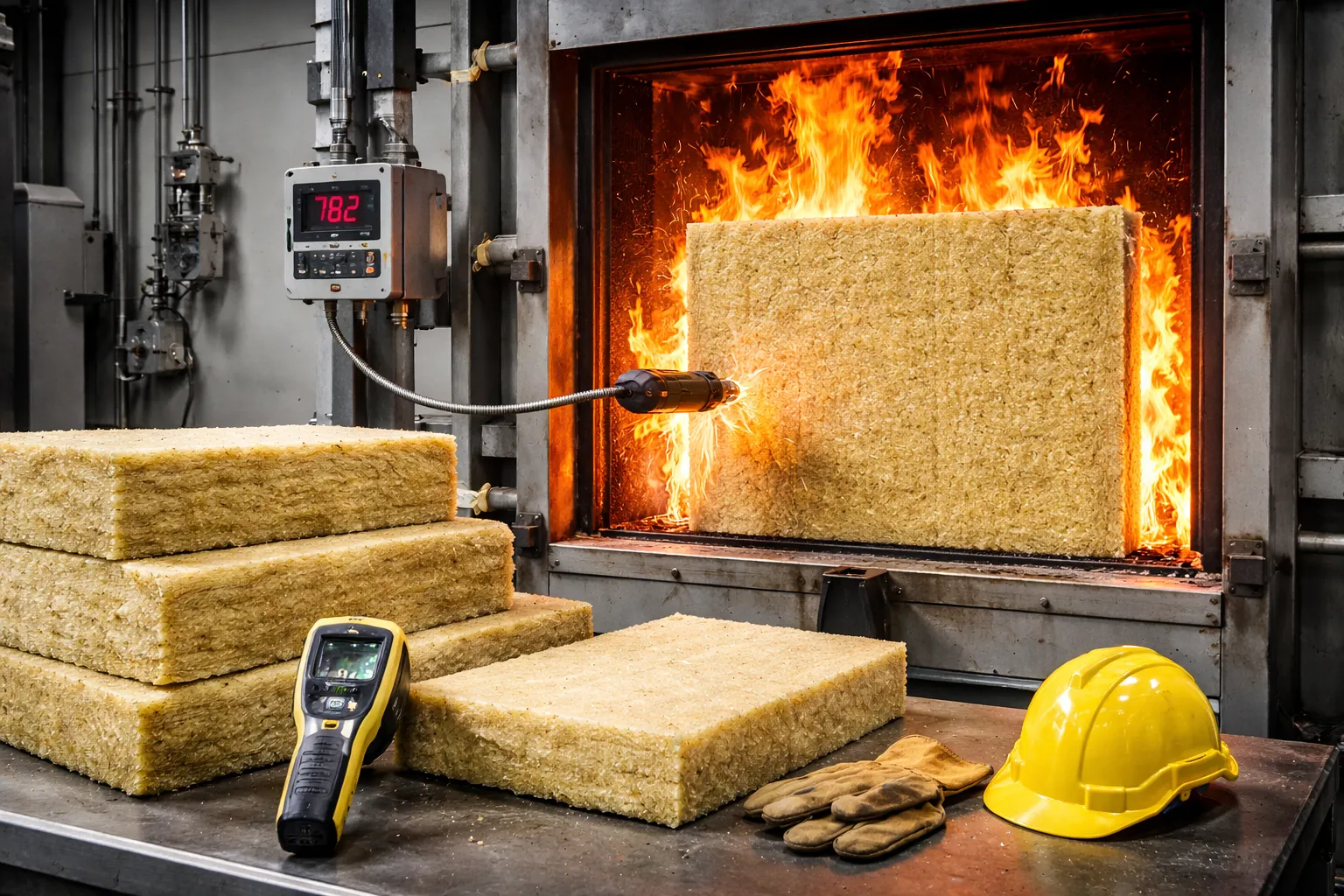
Stone wool is non-flammable and does not melt up to 1000°C. In case of fire:
- It prevents the spread of flames.
- It does not emit toxic gases.
- It maintains its structural integrity.
- It buys time for evacuation.
The use of flammable insulation materials in the Grenfell Tower (London) fire played a role in the severity of the tragedy.
What does the regulation say?
According to the 2024 regulations in Türkiye:
- 5 floors and above: A2 or A1 grade is mandatory.
- 10 floors and above: Only A1 class (rock wool)
- Shopping malls: Class A1 requirements
- Hospitals, schools: A1 class is recommended.
Are EPS and XPS safe?
EPS (styrofoam) and XPS are flammable materials. However, safety is increased with flame-retardant additives. They can be used in low-rise buildings and areas with low fire risk.
How to Make the Right Choice?
- High-rise building: Definitely rock wool.
- Family house: EPS or rock wool
- Communal living space: Choose rock wool.
- Budget is tight: Get at least an A2 grade.
Conclusion
Fire safety is not cheap. When choosing insulation materials, attention should be paid to the fire rating as much as the price. Life safety is paramount.